
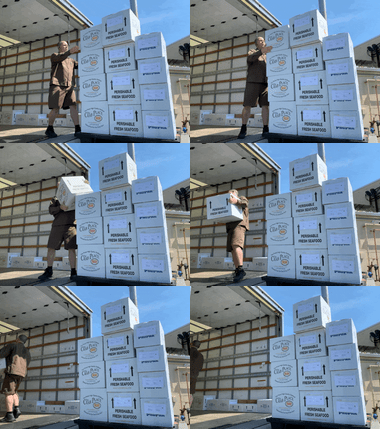
Why Is There a Packaging Charge on Your Order? An Honest Breakdown
Posted by Greg Cain on Jul 14th 2026
We have been shipping seafood to doorsteps for more than 30 years, and there is one line item at checkout that gets asked about more than any other: the $14.95 packaging charge.
It is a fair question. Why not build it into the prices the way most companies do? The answer makes more sense once you know what it takes to get a bushel of crabs from Crisfield, Maryland to your door still cold. So let us open the box.
What Is Actually in That Box
When you buy a book or a t-shirt online, the packaging is a poly bag or a plain cardboard box. Less than a dollar of material, and nobody charges separately for it.
Seafood is a different sport. Your order has to arrive intact and still cold after up to two days in the back of a truck in the middle of July. Here is what that takes.
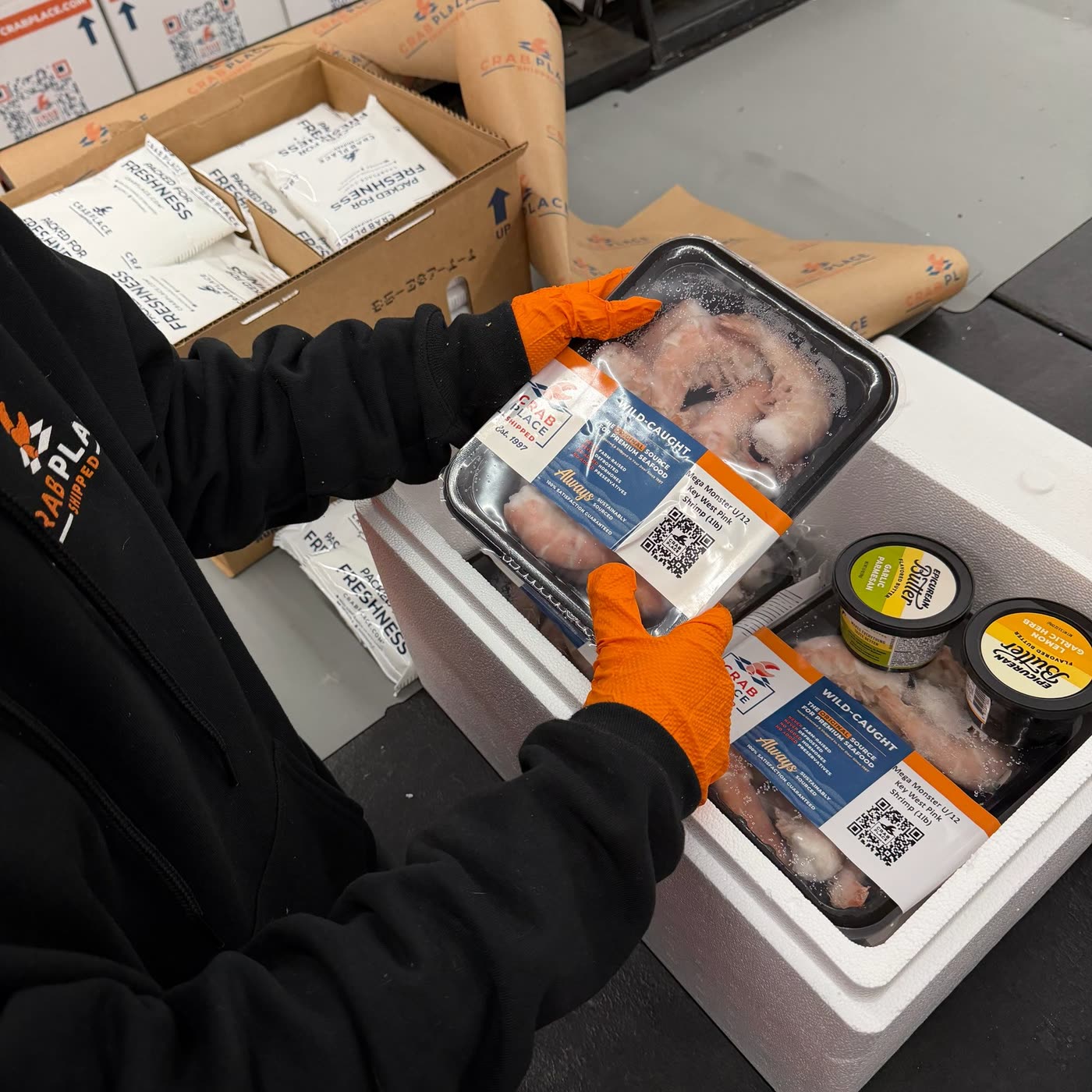
An insulated cooler. Every order ships inside an insulated foam cooler that holds a refrigerated state for up to 48 hours as long as the box stays sealed. It is not the styrofoam you are picturing. We use an eco friendly foam that biodegrades over 92% within about four years in a landfill. Conventional styrofoam runs 500 years or more.
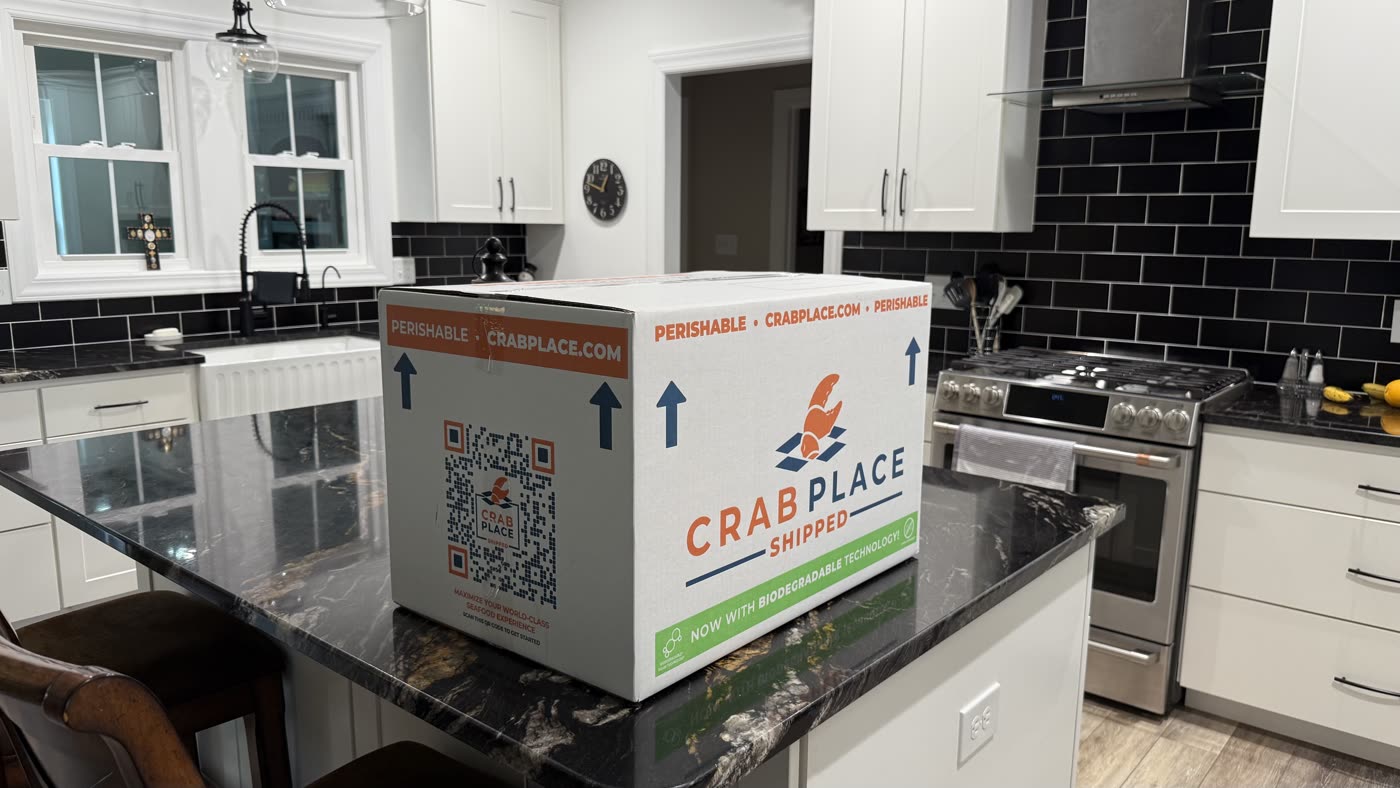
A corrugated outer box. The cooler rides inside a printed cardboard outer that the carrier requires, because that is what lets your package travel UPS automated sorting belts without getting hung up. Ours is printed with a QR code you can scan to pull up your order.
Dry ice or frozen gel packs. A frozen order ships with dry ice, about five pounds on a typical box, which takes the inside of that cooler down to roughly -120°F and burns off slowly on the road. If your dry ice is gone when the box arrives, that is by design. It did its job. A fresh order ships with food grade frozen gel packs instead, usually eight to ten of them, because dry ice would freeze fresh product solid. The gels hold everything at a hard chill without taking it past it.
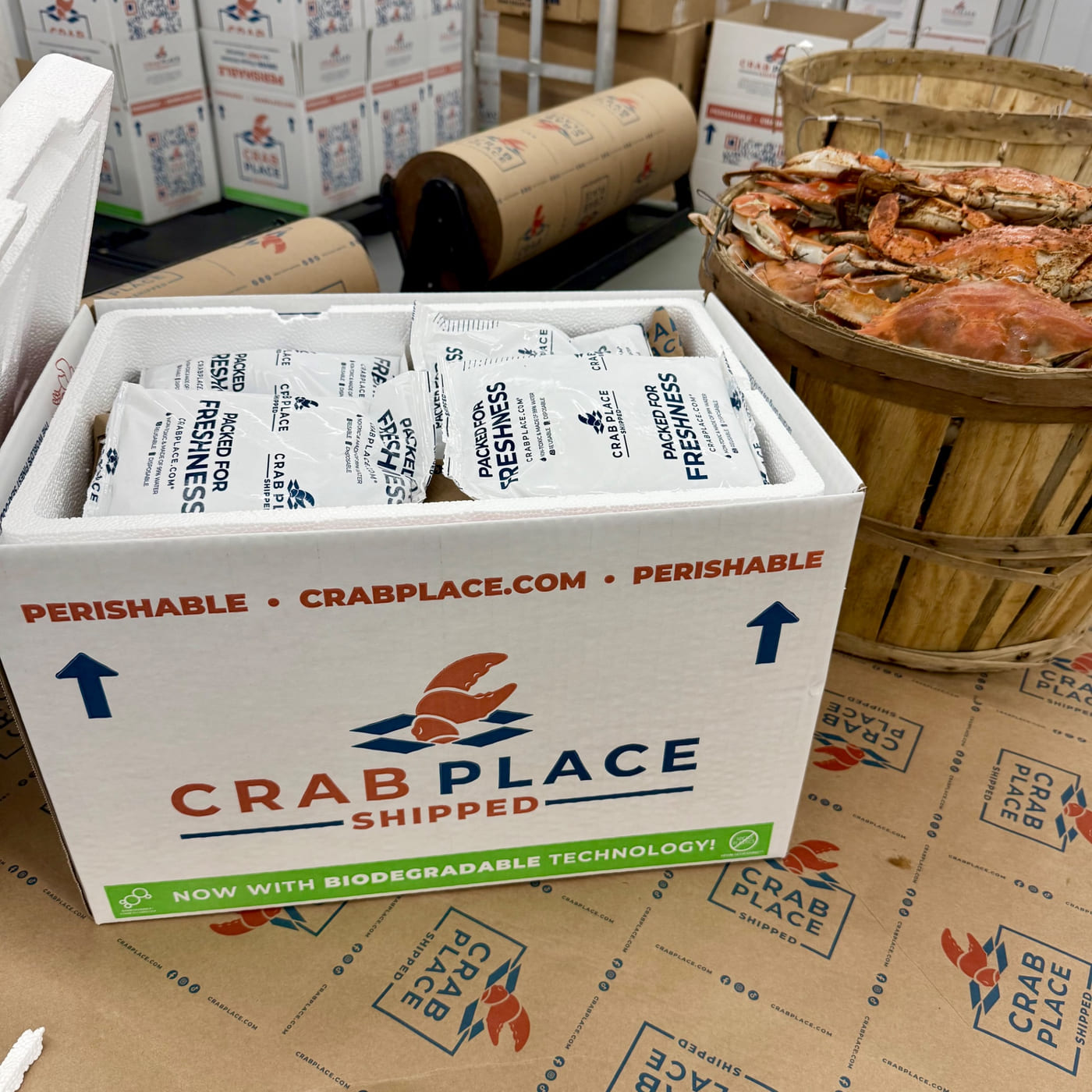
Crush paper and tape. We fill the empty space so there is no air pocket working against the coolant, and seal it up.
The Part You Cannot Buy: ColdLogic™
Everything above is a commodity. The foam shipper comes from Lifoam, the corrugated outer comes off a pallet, and gel packs and dry ice are gel packs and dry ice. Any seafood company can buy exactly what we buy.
What we built on top of it is ColdLogic™, the Intelligent Delivery System. Before your order reaches the packing table, ColdLogic works out how much dry ice and how many gel packs that specific box needs. It reads what is in the order, whether it is fresh, frozen or both, how big the box will be, the time of year, and where in the country it is headed.
That last part matters more than it sounds. Dry ice and gel packs do opposite jobs, so the answer is never simply more ice. A fresh box that gets dry ice arrives frozen, and a frozen box that gets gel packs arrives soft. Getting the combination right is the whole game, and it changes with every order.
The amounts themselves are measured rather than guessed. They come from thousands of real boxes we have already shipped, specifically the ones that arrived exactly as they should have. Your box is packed the way the boxes that worked were packed, for your contents, your season and your part of the map.
What All That Costs
Here is the part most companies will not put in writing. Our coolers run about $6 to $14 depending on size. The corrugated outer is $1.50 to $2.50. Gel packs cost us around 30 cents each, and dry ice, with delivery and the current surcharge, lands around 70 cents a pound.
Nearly all of it has doubled since 2020. A cooler that cost us $3 to $8 then costs $6 to $14 today. Corrugated boxes doubled. Dry ice doubled. Gel packs are up about 50%. Between inflation, oil prices (a key input in foam production) and the cost of trucking materials in, packaging is now one of our largest expenses.
Put it together. A bushel of crabs shipped in July takes a $14 cooler, a $2 outer and a dozen gel packs, so roughly $20 in materials before we account for the extra shipping weight those gels add. All in, that summer shipment costs us $22 to $28 to package and keep cold. We collect $14.95.
That is not a complaint, it is just the honest math. There is no profit in our packaging charge. On some orders it breaks even and on many it does not. It exists to offset a real cost rather than to recover it in full, and certainly not to pad anything.
Why It Sits on Its Own Line
Because folding it into prices would quietly overcharge most of you.
Here is the reason: one cooler ships your entire order. Whether you buy a pound of crab meat, or crab meat plus shrimp plus snow crab clusters, it all packs into a single box with a single set of coolant. Going up a box size adds maybe 10% in packaging cost, not 300%.
Now imagine packaging were built into the price of every product. That math only works if you order exactly one thing. Order three or four, which is how most of our customers shop, and you would pay for packaging three or four times over while we still used one box. One flat charge per order means you pay for what actually gets used. One cooler, one shipment, $14.95, however many items you add.
It also buys flexibility we could not offer otherwise. Collect your order at our facility in Crisfield with your own cooler and there is nothing to charge, so we take it off. And VIP Club members have the $14.95 waived entirely on orders of $100 or more, which is one of the quieter perks that adds up quickly if you order through the season.
The Bottom Line

We had two choices. Bury packaging invisibly in every product price and let multi item orders pay for it repeatedly, or put it on the receipt where you can see it, keep it flat and predictable, and let you skip it entirely when it does not apply.
We chose the receipt. It takes a little more explaining up front, which is what this post is for, but we think it is the fairer way round. And the next time a box lands on your porch and you open a cooler to properly cold seafood after two days on a truck, you will know exactly what that line item bought, and what ColdLogic™ did with it.
Questions about packaging or shipping? Reach out anytime. We are happy to talk it through.