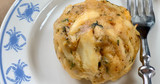

Touched Four Times Before It Ships: Inside Our Hard Crab Division
Jul 21st 2026
Between May and November, somewhere between 300 and 700 bushels of hard crabs move through our Crisfield facility every single week. Around the big crab holidays — Mother’s Day, Memorial Day, Father’s Day, the Fourth of July, and Labor Day — we run at the very top of that range.
Here’s what most people never see: before a single one of those crabs reaches your table, it’s been picked up and inspected by human hands three or four separate times. Not scanned. Not spot-checked. Handled, measured, and judged — one crab at a time. This is how that happens.
It starts wherever the crabs are running best
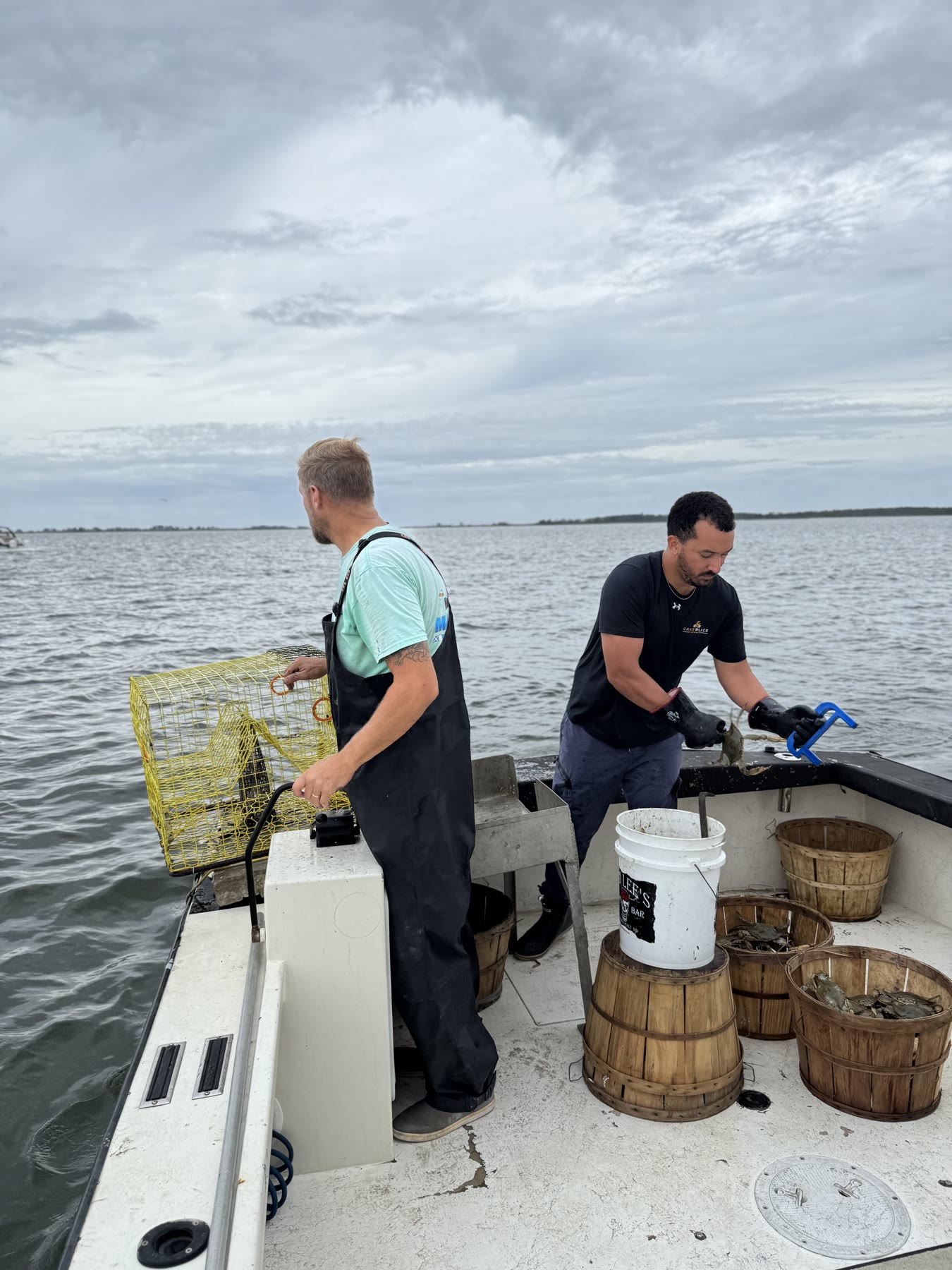
We don’t have one source — we have the whole Bay, and beyond. We source crabs from all over the eastern United States and buy where they’re heaviest and best on any given week. Right now the Chester River run has hit up in the Upper Chesapeake, and huge, heavy crabs are flooding down to us on refrigerated trucks three to four days a week — right alongside what our local Crisfield watermen bring in, and some beautiful Louisiana crabs still making their way to us too.
Every crab has already had one rough grade before it reaches us: the waterman’s. Out on the boat they sort into the industry’s #1s, #2s, and #3s — #1s the big males, #2s the smaller males, #3s the females (big or small, all one basket). It’s a loose grade, but it gives us a starting point.
Touch #1: every crab, alive, by hand
A truck backs up and the crew moves fast — forklift the pallets out of the refrigerated trailer and into our coolers. Our biggest walk-in holds 750 bushels, and whatever comes in that day gets processed that day.
Then the first pair of hands. We dump each bushel out onto a cull table where a person can see every last crab, pull anything that didn’t make the trip alive, and re-bushel the rest. Six to eight people work this step alone. By the time a basket leaves that table, we’ve laid eyes and hands on every crab in it — and we know it’s all live before it ever sees steam.
The steam room: 65 horsepower, two retorts, 22 minutes
Our 65-hp boiler feeds two pressurized retorts — one holds 16 bushels, the other 20 — and a full batch cooks in about 22 minutes. Loading them is its own piece of engineering: we roll the bushels up on a custom cart built to the exact height of the chamber floor, and a second cart nested on top releases and rolls straight into the chamber. The doors get winched down, the batch cooks under pressure, and an automated timer runs it.
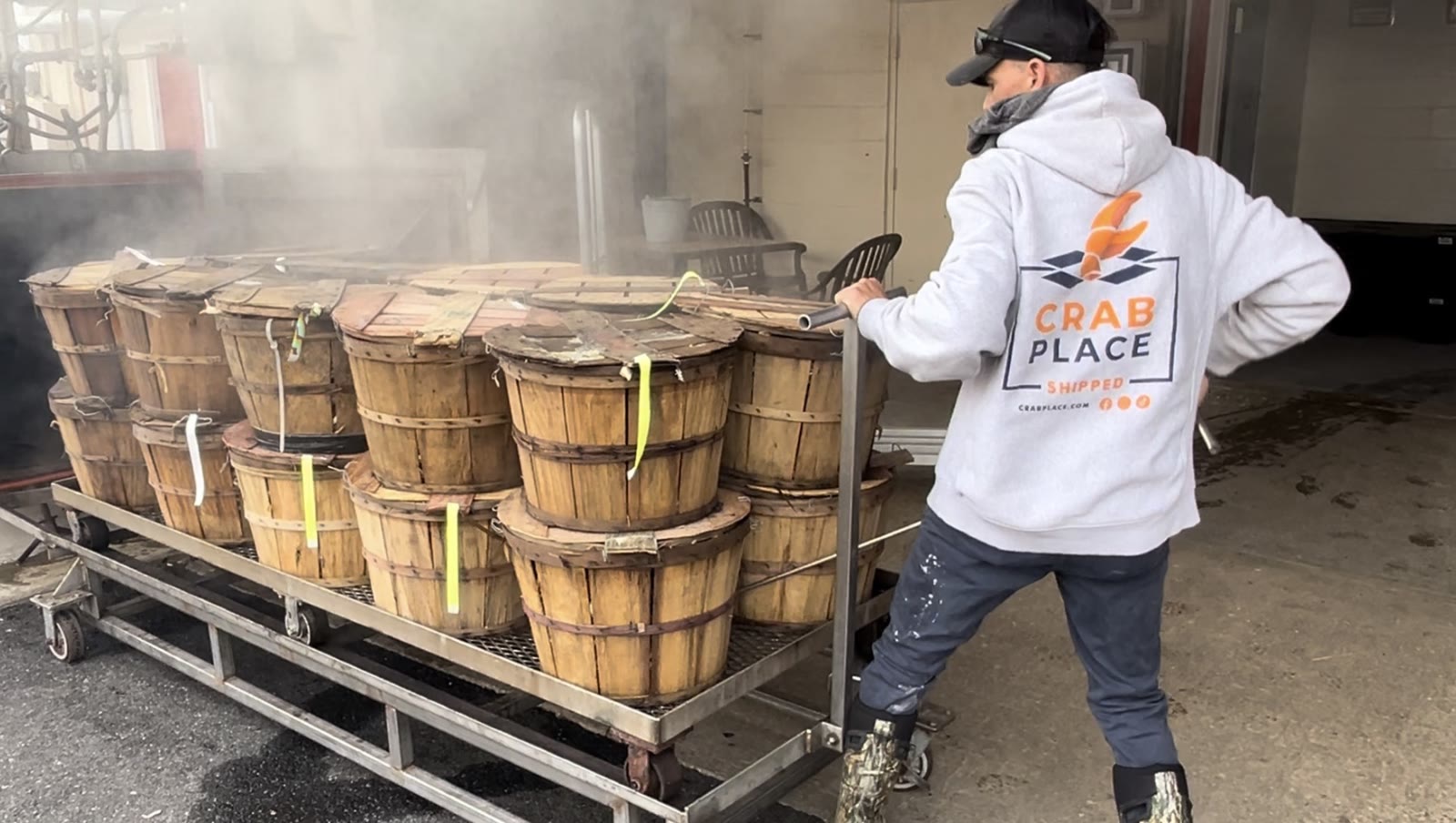
None of those settings are guesswork. Every time-and-temperature setting is calibrated and approved by the Maryland State Health Department, and our equipment logs every single batch we steam. If you’ve ever wondered whether “food safety” is just a phrase we put on a page — here, it’s a database entry for every basket that comes through.
Touch #2: the grade line
This is where the craft lives. After the cook, our graders work the line by hand, rulers out, sizing every crab by its point-to-point measurement. Males sort into Standards, Selects, Premiums, and Colossals; females into Large and Regular — the exact sizes you pick from on the site.
But they’re doing far more than measuring. They feel each crab for weight — a light one gets pulled and set aside as a picking crab rather than shipped whole. They read the shell: a little “rust” on the underside is a good sign, a heavy, mature crab full of meat, while a glossy, clear-white shell means it molted recently and may come up empty. And they catch the flaws: a cracked or broken shell, too many missing legs or claws. Anything that won’t arrive right gets kicked.
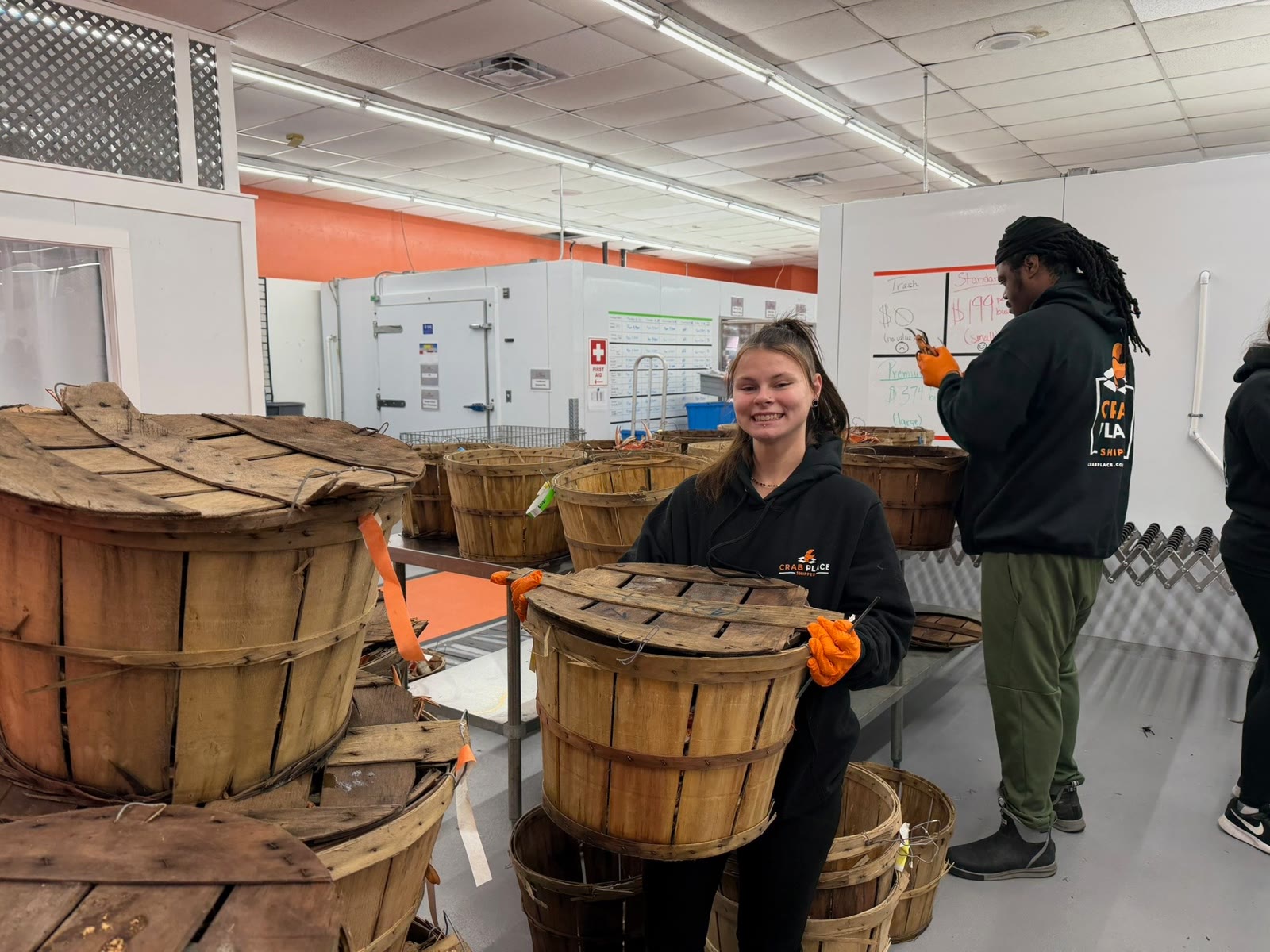
Reading crabs like that isn’t something you learn in an afternoon. We certify our graders in-house, and it’s usually a three-month apprenticeship before someone works the grade line on their own.
Touches #3 and #4: packing, and the QC manager nobody sees coming
When your order comes up, a packer pulls from the graded baskets to count out exactly what you bought — and evaluates every crab a third time as they go. If one slipped through that shouldn’t have, it comes right back out into the picking pile.
And somewhere between the graders and the packers, our QC manager is pulling random baskets and re-measuring them against the grade. That’s the fourth touch — the check on the checkers — and it’s why the grade you order is the grade you get.
The people who actually do it
Our Hard Crab Division is about eight people, led by Matthew Cain, Jr., who treats that room like his name is on it — because it is. His right hand is Montel, who’s been with us about five years; the two of them run the area as a team and hold it to a standard we’re genuinely proud of.
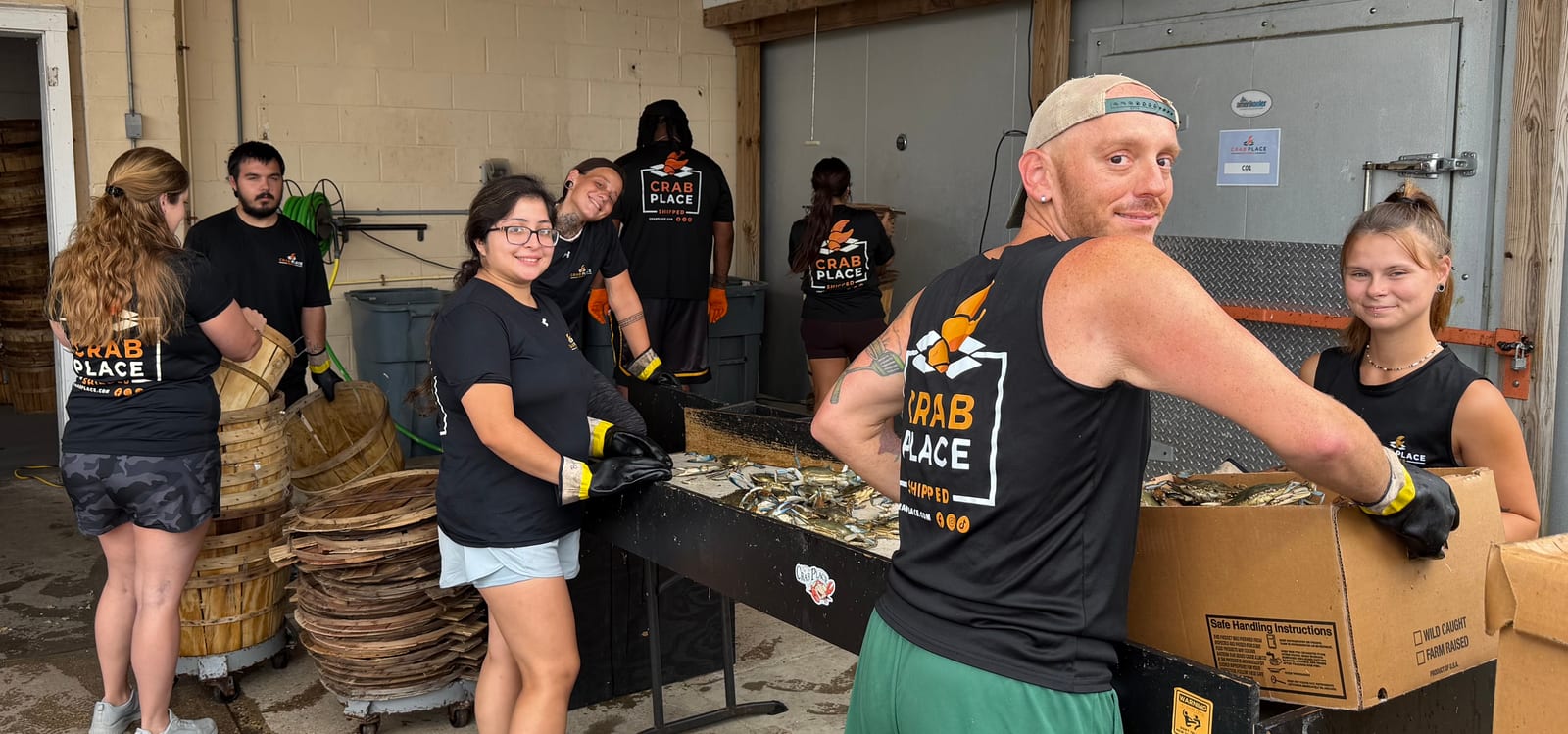
Depending on the season, we’ll cull — pull out and reject — anywhere from 10% to 40% of everything that comes in, and it runs higher around molting season, when more crabs come up light and empty. That sounds like a lot, and it is. But every crab we set aside is one crab you don’t pay to have shipped to your door.
The last touch is yours
Add it up, and the same crab gets handled, measured, weighed, and judged three or four times before it’s ever sealed in a box: the live cull, the grade line, the packer’s count, and a random QC check on top. We do all of that work on the front end for one reason — so that the last touch, the one that matters most, is yours: the moment you open the box.
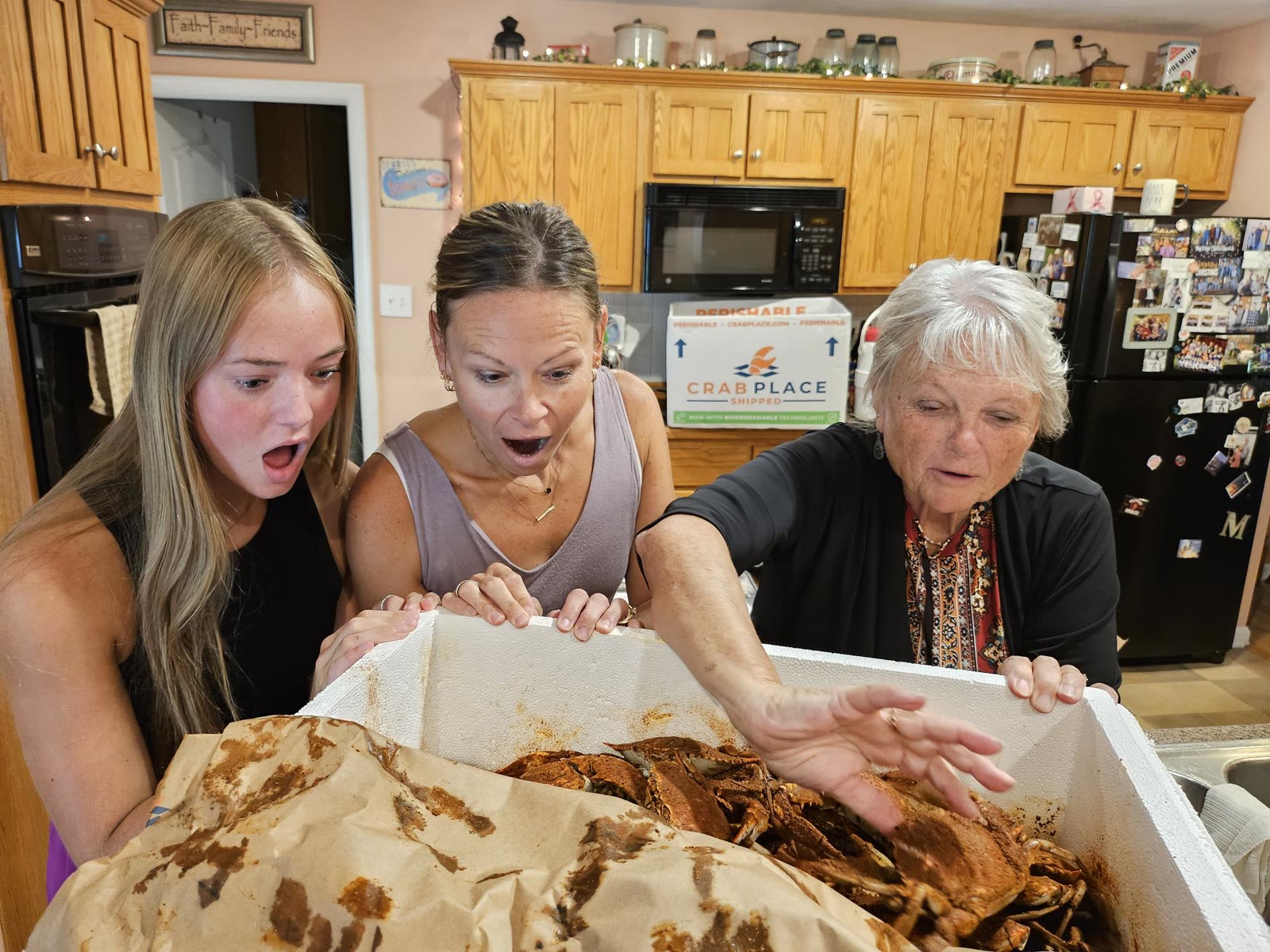
That’s the one we can’t do over. So we make sure everything before it is right.